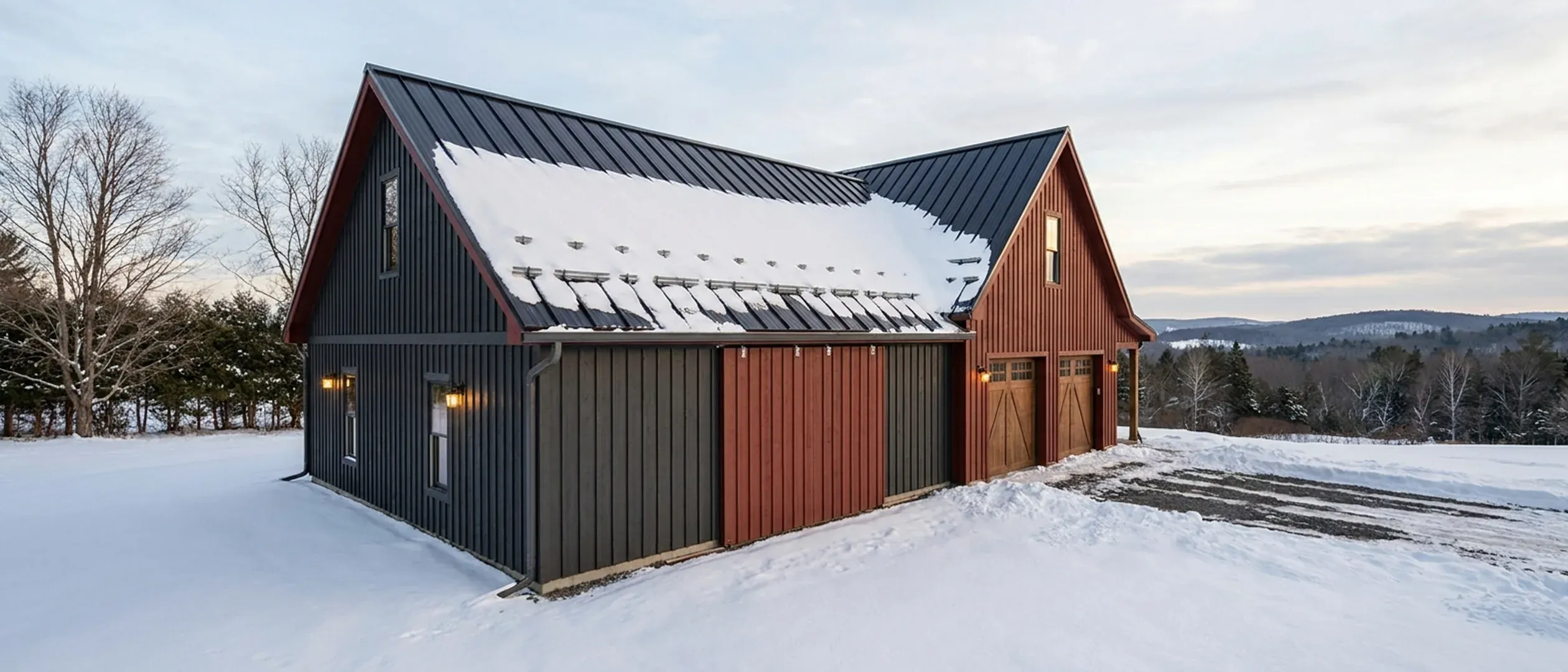
Are Barndominiums Worth It in New York? When They Make Sense and When They Do Not
Whether a barndominium is worth it depends on what you need from the building and where it will stand. It is usually a good choice when you need a large shop or equipment space anyway, want an open plan that can change, and plan to stay for a long time on rural land. It is usually a weaker choice on a small suburban lot, for a buyer who may sell within a few years, or where the loan depends on an appraisal that the local sales cannot support. New York adds its own questions: a long heating season, heavy snow in some regions, land-use rules that change from one town to the next, and rural appraisals that depend on how many comparable homes have sold nearby. This page sets out when it is worth it, when it is not, and what to check before deciding.
Figures on this page are cited third-party or government data, not a quote from New York Barndominium Builders.
Bottom Line Up Front
- A barndominium is usually worth it when you need the shop anyway, own or can buy suitable rural land, and plan to stay long enough that resale value matters less than how the building works for you.
- It is usually not worth it on a small lot where the zoning or neighbourhood favours conventional houses, or where the loan depends on an appraisal the local comparable sales cannot support.
- Before deciding in New York, check the land-use rules for the parcel, the septic and water options, the heating system the design will use, and whether a lender and appraiser near you have handled one.
When a barndominium is usually worth it
You need the shop anyway
If you would otherwise build a house and a separate barn or garage, putting both under one roof on one foundation is where a barndominium earns its keep. See shouses.
You want an open plan that can change
A clear-span frame lets you lay out rooms freely and change them later without moving load-bearing walls.
You are staying a long time
The longer you stay, the more the building's value to you outweighs how quickly it would sell.
You have the land and a plan for water, septic and access
Rural land that can take a septic system and a well, with road access and zoning that allows the building, is the natural home for a barndominium.
When it usually is not
You want a conventional house on a small lot
On a suburban lot, zoning, neighbourhood character and resale all favour a conventional house, and the barndominium's strengths go unused.
You may sell within a few years
Fewer buyers and fewer comparable sales can mean a longer, less predictable sale.
The loan depends on a high appraisal
If the numbers only work when the appraisal comes in high, the lack of local comparables is a serious risk.
The shop is bigger than the house needs
Build the shop for how you will use it. A very large shop adds cost, heating load and lender questions without adding much appraised value.
What to check before deciding
The zoning for the parcel
Ask the town, city or village whether the building, the shop and any business use are allowed, and what setbacks apply.
Septic and water
Whether the soil can take a septic system, which the local health department must approve, and where the well will go can decide whether the land works at all.
The heating system
Decide what will heat the building and what it will cost to run before comparing quotes on the shell.
A lender and an insurer on the actual design
Get a lender that has financed a barndominium, and an insurance quote on the real plans, before you commit. See financing.
Flood risk and wet ground
NOAA's summary reports a large increase in extreme rainfall in New York. Check the flood map and walk the land in spring before buying.
Reading this because you are weighing a build? The next step is a plan drawn for your program.
What's different about New York
Land-use rules are set town by town
Zoning in New York is set by each city, town and village, so whether a barndominium, a large accessory shop or a metal-sided house is allowed depends on the parcel. Check the zoning before you buy the land, not after. Agricultural district land does not change that: state law limits how far local rules can restrict a farm operation in a county agricultural district, but the house still needs a building permit and must meet the zoning for a home. The legal guide explains where the rules come from.
A long heating season shapes running costs
NOAA's New York State Climate Summary puts the long-term statewide average winter temperature at 22.2°F. Over the life of the building, how well it is insulated and air-sealed matters more to what it costs to live in than whether the frame is steel or wood.
Most New Yorkers heat with gas or oil; a new building may not
The Energy Information Administration reports that about 6 in 10 New York households heat with natural gas and about 1 in 5 with petroleum products, mainly heating oil. Not every rural site has gas service, and New York law directs the building code to prohibit fossil-fuel equipment in most new low-rise buildings. As of the Department of State's July 2026 notice, enforcement of that rule is suspended by court order while litigation continues, so we confirm the current rule with your building department before specifying a furnace, water heater or range. A heat-pump design works either way.
Snow shapes the design in some regions
NOAA's summary describes frequent heavy lake-effect snow downwind of Lakes Ontario and Erie. A barndominium in those areas is designed for a heavier roof load than one in a milder part of the state, and the layout should keep sliding snow away from doors and driveways.
Appraisal depends on local sales
Fannie Mae's Selling Guide says unique or nontraditional housing is eligible where the appraiser has enough information to develop a reliable value, and that rural properties may lack truly comparable sales nearby. Where few barndominiums have sold, a loan that depends on a high appraisal is the biggest risk.
A big shop is not always big value
The same guide says significant outbuildings may indicate that a property is agricultural in nature, and the lender must decide whether it is residential. A shop that dwarfs the house can complicate the loan as well as the resale.
Pros and cons, honestly
Pros
- Shop and house on one foundation and under one roof
- Open plan that can be changed later
- Metal roof and siding that shed snow and weather
- Suits rural land and long ownership
- A kit shell goes up quickly once the foundation is in
Cons
- Fewer comparable sales can make appraisal and resale harder
- Zoning on some parcels will not allow it
- Heating a tall open space through a long winter costs more if insulation is poor
- Heating choices for a new building need settling early
- A very large shop can complicate the loan
- Less suited to small suburban lots
Are barndominiums worth it in New York?
Do barndominiums hold their value in New York?
Is it cheaper to build a barndominium than a house?
Can I get a mortgage on a barndominium in New York?
Is a barndominium practical in a snowy part of New York?
What does it cost to heat a barndominium in New York?
Is buying rural land for a barndominium a good idea?
What should I do before deciding?
Questions answered? Tell us what you want to build and we will put real numbers against it.
Sources
- NOAA National Centers for Environmental Information — New York State Climate Summary 2022
- U.S. Energy Information Administration — New York State Profile and Energy Estimates, analysis (updated 19 February 2026)
- Fannie Mae Selling Guide — B4-1.3-08, Comparable Sales
- Fannie Mae Selling Guide — B4-1.3-05, Improvements Section of the Appraisal Report
- New York Department of State — Notice of Adoption, 2025 Uniform Code and Energy Code (with 2 July 2026 update on the court ruling)
- New York Agriculture and Markets Law section 305-a — local laws in agricultural districts
- New York State Department of Health — 10 NYCRR Appendix 75-A, Wastewater Treatment Standards: Individual Household Systems (PDF)
Keep reading
The pages that answer the next question this one raises.
Barndominium pros and cons
Strengths and weaknesses against New York conditions.
Read itBarndominium cost
What drives the cost of a build.
Read itBarndominium vs house cost
How the two compare.
Read itBarndominium financing
Loans and appraisals.
Read itShouses
Shop and house under one roof.
Read itStart the survey
Tell us about your land and plans.
Read itWant a real number instead of a range?
Start the survey and tell us about your land and what you want to build. Include the city, town or village and the parcel ID if you have them, because in New York the municipality, the soil and the well and septic answers change the budget more than the building does. The survey costs nothing.